Endometriosis and infertility
Endometriosis treatment in Dublin, Ireland
Medically reviewed by Dr. Phil Boyle, MICGP, MRCGP · Last reviewed June 2026
Endometriosis, often called endo, is a condition where tissue similar to the uterine lining grows outside the uterus. At NeoFertility we start with medical management, including Low Dose Naltrexone and cycle balancing, and refer for excision surgery only when medical treatment alone has not worked.
What endometriosis is
Endometriosis is one of the most common conditions identified at NeoFertility, often shortened to endo, and it is treatable.
It is a condition where tissue like the uterine lining grows outside the uterus. It typically appears on the ovaries, the ligaments supporting the uterus, the bowel, and the fallopian tubes.
Each month, this misplaced tissue responds to your hormonal cycle and causes inflammation, scarring, and adhesions.
The symptoms can include painful periods, the medical term is dysmenorrhoea, painful intercourse, or dyspareunia, and bowel or GI symptoms tied to your cycle. These are not normal. They are worth investigating, no matter how many times you have been told otherwise.
Endometriosis can also be completely silent. No pain, no warning signs at all. For some women, the only clue is difficulty conceiving or a pattern of early pregnancy loss.
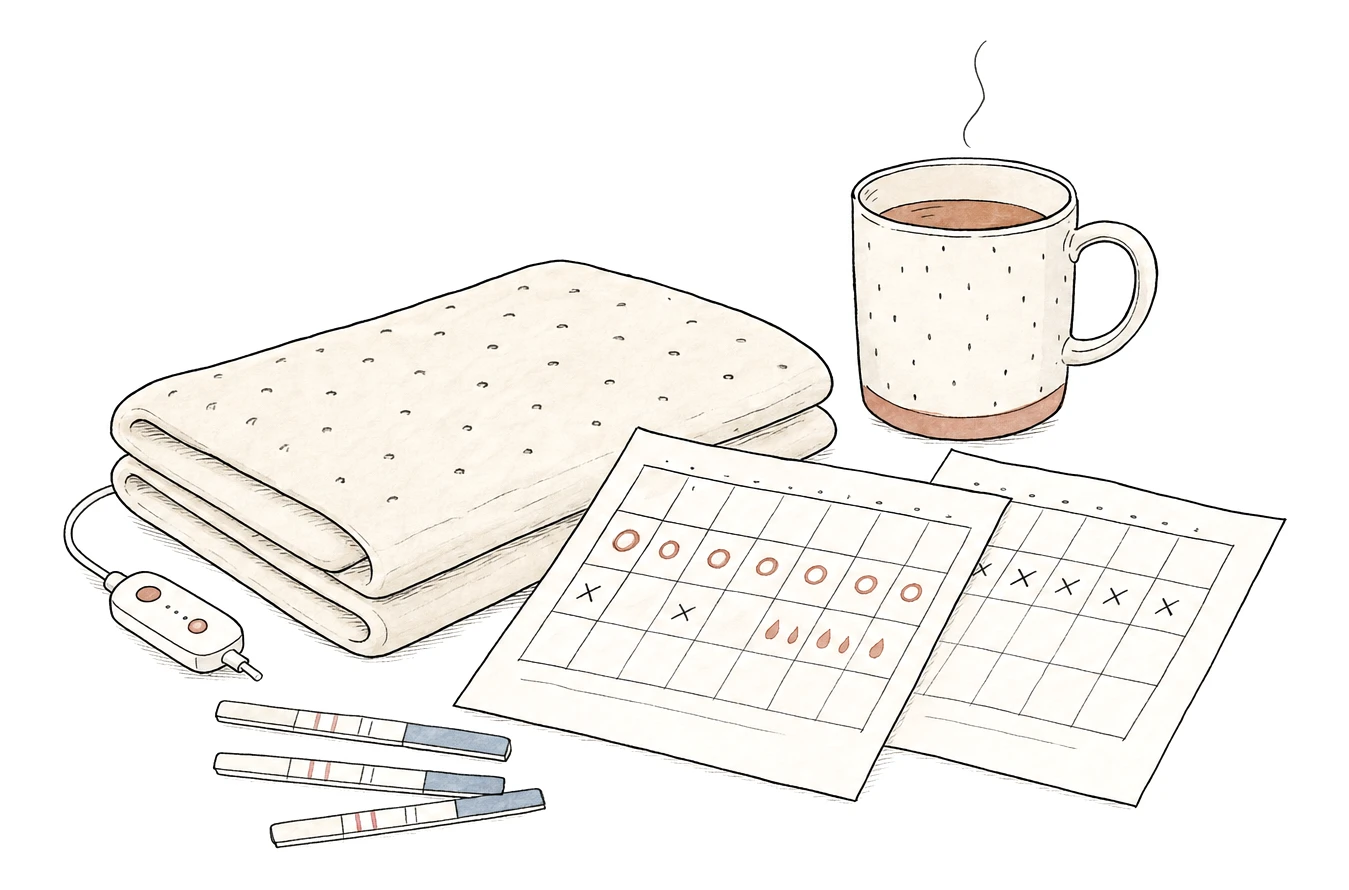
Endometriosis is found in approximately one-third of women investigated for infertility, with reported rates ranging from 30 to 71 percent depending on the population studied (D'Hooghe et al., Seminars in Reproductive Medicine, 2003, pooled figure from 781 of 2,372 infertile women across studies).
Diagnosing endometriosis
There is no blood test that definitively diagnoses endometriosis.
Laparoscopy is the definitive investigation. But a laparoscopy that reports nothing does not end the conversation, and a normal ultrasound does not rule endometriosis out. NeoFertility sees women regularly who have been through both and are still in pain or not conceiving.
Before we consider surgical referral, we build a detailed clinical picture. We look at the mucus pattern, we look at timed hormone levels at 7 days post ovulation, and we look at progesterone and oestradiol and whether they are reaching their targets.
We look at the symptom cluster across multiple cycles. That clinical picture tells us a great deal.
Transvaginal ultrasound can suggest endometriomas and deep disease when they are present. But it cannot rule out superficial disease, and that is often what has been missed before a full workup.
What we are looking for is a cluster of signals. Suboptimal progesterone at 7 DPO. A mucus pattern pointing toward an inflammatory environment. A history of period symptoms dismissed as normal.
When that picture builds, we have a working clinical case for endometriosis before referring for laparoscopy. For more, see NeoFertility's approach to diagnosis.
Medical treatment for endometriosis
If you have spent years being offered the pill, a scope, or IVF and nothing in between, this is the part of the page that matters most.
So what we do is we look at Low Dose Naltrexone, we look at vitamin D3, we look at omega 3, and we look at a targeted dietary strategy. Together, these form a multi-factorial medical treatment aimed at reducing inflammation and supporting cycle health.
Low Dose Naltrexone, or LDN, is an off-label prescription treatment that modulates the immune system and reduces inflammation. It is central to NeoFertility's medical treatment of endometriosis.
In the 2019 NeoFertility cohort (Boyle et al., JRRM 2025, Table 5), 71 percent of all couples received LDN as part of their pre-conception treatment.
The off-label framing is nothing unusual. Hormonal contraceptives are also used off-label for period pain and endometriosis. In Dr. Boyle's clinical experience, over 95 percent of patients find LDN's side effects acceptable. The most common are vivid dreams and, occasionally, dry mouth.
At the same time, we work to boost and balance your cycle. Hormone deficiencies are identified from timed blood tests and corrected with prescription support. The quality of ovulation is monitored with progesterone and oestradiol at 7 DPO.
In Dr. Boyle's clinical experience, early signs that treatment is working, including improved cycle chart readings and reduced symptoms, are often visible within the first few cycles. You do not have to wait a year to know whether the plan is working.
NeoFertility is not the only part of this treatment. Dr. Agnes Toth, NeoFertility's obstetrician-gynaecologist, brings particular expertise in inflammation and hormonal dysfunction to endometriosis cases. You can see the published results for outcome data across the full cohort.
When surgery is the right step
Dr. Phil Boyle is a GP who refers for surgery rather than performing it himself.
He holds MICGP and MRCGP credentials and is the founder of NeoFertility. He is also president of the International Institute for Restorative Reproductive Medicine (IIRRM), a body of clinicians advancing evidence-based restorative treatments worldwide.
Treatment is different for every woman, and many of the women we treat never need surgery at all. NeoFertility approach
For many women, surgery becomes the right step when medical management alone has not achieved conception after four balanced cycles. For others, it is clear from the start that surgery should come first, and we say so early.
When we refer for surgery, we refer to skilled excision specialists. Excision removes endometrial implants rather than burning them, and it is the surgical approach we prefer. After surgery, we resume your restorative treatment.
Surgical referral is arranged as part of your treatment plan, not at the first consultation. It is one step in a longer process, not the end of it.
In the 2019 NeoFertility cohort (Boyle et al., JRRM 2025), 40 percent of patients had laparoscopy and 43 percent had hysteroscopy as part of their treatment. Of those who had surgery, 60 percent were found to have endometriosis.
That figure tells you how often this condition is missed before a full investigation.
Endometriosis and miscarriage
Women with endometriosis are at higher risk of miscarriage.
The inflammatory environment endometriosis creates can disrupt implantation and early pregnancy.
In published research, women with endometriosis had a miscarriage rate of 35.8 percent (95% CI 29.6 to 42.0) compared with 22.0 percent in women without endometriosis (95% CI 16.7 to 27.0; Kohl Schwartz et al., Fertility and Sterility, 2017).
In subfertile women with endometriosis specifically, the miscarriage rate was 50 percent, compared with 25.8 percent in subfertile women without endometriosis in the same study.
If you have had one or more miscarriages and endometriosis is part of your picture, NeoFertility takes a targeted approach to both problems at the same time. See the page on recurrent miscarriage for more on how pregnancy loss is managed.
Michelle and Brian: stage 4 endometriosis, baby in her early forties
Michelle came to us with stage 4 endometriosis, an ovary fused to the bowel, and two miscarriages behind her.
IVF with donor eggs had been presented as her only option. In her early forties, after treatment at NeoFertility, she had a healthy baby.
Read Michelle and Brian's story in full. Or browse our patient stories.
Endometriosis treatment in Ireland: what it involves at NeoFertility
If you have endometriosis in Ireland and want to know what treatment at NeoFertility involves, it starts with medical management at your first consultation. We look at Low Dose Naltrexone, vitamin D3 and omega 3, and a targeted dietary strategy, and we balance your cycle alongside all of it. Timed blood tests at 7 DPO then show whether progesterone and oestradiol are reaching their targets. Low Dose Naltrexone is an off-label prescription treatment, and it sits at the centre of our medical treatment of endometriosis.
Surgery is the second part of the picture where it is needed. For many women it comes into view when medical management alone has not achieved conception after four balanced cycles. For some it comes first, and we tell you that early. We arrange the referral to surgeons skilled in excision, and we stay your treating clinicians before and after the operation.
If having a baby is part of what you want, book the fertility consultation: 45 minutes with Dr. Boyle or Dr. Toth, EUR 300. If the endometriosis itself is your concern and pregnancy is not the aim for now, book the women's health consultation instead: 20 minutes, EUR 100. You can book your first consultation on our contact page.
What to expect from endometriosis treatment
Medical treatment begins from your first consultation.
Treatment is a process over time. The investigation phase typically takes one to two months. If surgical referral is right for you, we coordinate it and continue as your treating clinicians before and after.
In Dr. Boyle's clinical experience, many of the women who attend NeoFertility for endometriosis treatment in Ireland conceive naturally after medical management, without IVF. You do not need a GP referral to attend NeoFertility. You can self-refer directly.
Both Dr. Phil Boyle and Dr. Agnes Toth see patients at the clinic. Confirm availability when you book your first consultation. For a full picture of how treatment unfolds, see the treatment plan. For costs, see the treatment plan cost page.
NeoFertility is a restorative fertility clinic at Suite 7, 1st Floor, Beacon Mall, Beacon Court, Sandyford, Dublin 18.
Questions about endometriosis
Do I have endometriosis if I have no pain?
Endometriosis can be completely silent, with no pain and no warning signs at all.
For some women, the only clue is difficulty conceiving or a pattern of early pregnancy loss. This is sometimes called silent endometriosis, and it is not rare.
A normal ultrasound does not rule it out, and a laparoscopy that reports nothing does not rule it out either. Before we consider surgery, we build a detailed clinical picture from your fertility chart, timed hormone tests, and symptom history.
Can endometriosis be treated without surgery?
Often, yes. If you have been told your only choices are the pill, surgery, or IVF, there is a path in between, and that is where we start.
At NeoFertility we treat endometriosis with medical management: Low Dose Naltrexone, vitamin D3, omega 3, and a targeted dietary strategy, alongside cycle balancing. This reduces inflammation and supports cycle health while we monitor your progress.
Whether surgery enters the picture is different for every woman. For many, it is considered only when medical management alone has not achieved conception after four balanced cycles. For some, it is the right step straight away.
When we do refer for surgery, we refer to skilled excision specialists. We do not perform laparoscopy ourselves.
Does endometriosis cause miscarriage?
In many cases, yes. Endometriosis is associated with a higher miscarriage risk. If you have been told your losses were bad luck while endometriosis is part of your picture, that is worth taking seriously.
In published research, women with endometriosis had a miscarriage rate of 35.8 percent (95% CI 29.6 to 42.0) compared with 22.0 percent in women without endometriosis (95% CI 16.7 to 27.0; Kohl Schwartz et al., Fertility and Sterility, 2017).
The inflammatory environment endometriosis creates can disrupt implantation and early pregnancy. For couples with both endometriosis and recurrent miscarriage, we take a targeted approach to both problems at the same time. See our page on recurrent miscarriage for more.
Does NeoFertility perform laparoscopic surgery?
Not directly. Dr. Boyle is a GP (MICGP, MRCGP) and does not perform surgery.
NeoFertility provides the full medical workup, manages cycle balancing and medical treatment, and refers to skilled excision specialists when surgery is the right next step. We remain your treating clinicians before, during, and after any surgical referral.
This is the scope of the service. Many of the women we treat for endometriosis do not end up needing surgery at all.
What is Low Dose Naltrexone and why do you use it for endometriosis?
Low Dose Naltrexone, or LDN, is an off-label prescription treatment that modulates the immune system and reduces inflammation. It is particularly useful for conditions with an inflammatory component, which includes endometriosis.
In our 2019 RRM cohort (Boyle et al., JRRM 2025, Table 5), 71 percent of all couples received LDN as part of their pre-conception treatment. In our experience, over 95 percent of patients find the side effects acceptable.
The most common are vivid dreams and, occasionally, dry mouth.
In our clinical experience, LDN can be continued safely through pregnancy. If you have spent years on the pill to manage pain and felt worse on it, LDN is a different kind of medicine. It aims at the inflammation underneath, not at masking the cycle.
I have stage 4 endometriosis and have been told my chances are slim. Is that true at NeoFertility?
Not necessarily. We have treated women with advanced endometriosis, including cases where the ovary was fused to the bowel and where conventional clinics had recommended IVF with donor eggs as the only option.
Michelle had stage 4 endometriosis and had her baby in her early forties after treatment at NeoFertility. Read her story. Advanced endometriosis changes the treatment plan, but it does not rule out a good outcome.
I have already had excision surgery. Should I still come to NeoFertility?
In most cases, yes. Surgery is one step, not the whole treatment. Even after complete excision, many women still need cycle balancing, pre-conception hormone assessment, and pregnancy support to reduce the risk of miscarriage.
We often see women who have had excision surgery and are still not conceiving, or are conceiving and miscarrying. We pick up where the surgeon left off.
Can you get pregnant after endometriosis surgery?
Many women do conceive after treatment for endometriosis, and surgery is one step in the plan rather than the whole of it. Even after complete excision, cycle balancing, a timed pre-conception hormone assessment and pregnancy support still matter, because endometriosis carries a higher miscarriage risk: 35.8% against 22.0% in women without it (Kohl Schwartz et al., Fertility and Sterility, 2017).
Michelle's story shows stage 4 endometriosis ending in a baby in her early forties.
Does low dose naltrexone affect fertility?
Low dose naltrexone (LDN) is part of the pre-conception plan for 71% of couples in NeoFertility's 2019 cohort, whose crude live birth rate was 41% (Boyle et al., Journal of Restorative Reproductive Medicine, 2025). In Dr. Boyle's clinical experience, over 95% of patients find the side effects acceptable, mainly vivid dreams and dry mouth.
LDN modulates the immune system and reduces inflammation.
Why won't some doctors prescribe low dose naltrexone?
Its use for endometriosis is off-label, which means the licence covers a different use, and not every doctor prescribes off-label. Hormonal contraceptives are also used off-label for period pain and endometriosis, so the position is the same.
Dr. Boyle has prescribed LDN for many years.
What are the stages of endometriosis?
Endometriosis is staged I to IV on the revised ASRM classification: minimal (I), mild (II), moderate (III) and severe (IV), scored from the disease found at surgery. The ASRM subcommittee that revised the system found the score was not a sensitive predictor of pregnancy after treatment (ASRM, Fertility and Sterility, 1997).
What type of doctor treats endometriosis?
Endometriosis needs medical management of the whole cycle and, where surgery is the right step, excision by a surgeon trained to find and remove it. The clinic's doctors provide the medical management, and Dr. Boyle is a GP who does not perform surgery, so surgical referral goes to skilled excision specialists.
In Dr. Boyle's clinical experience, only a small number of gynaecological surgeons are trained to treat endometriosis properly.